Written Work
Publications
Research and writing exploring film festivals, conflict and cultural memory across diverse formats.

Written Work
Research and writing exploring film festivals, conflict and cultural memory across diverse formats.
Written by the Author
Academic monographs exploring the intersection of cinema, history and political transformation.
2023
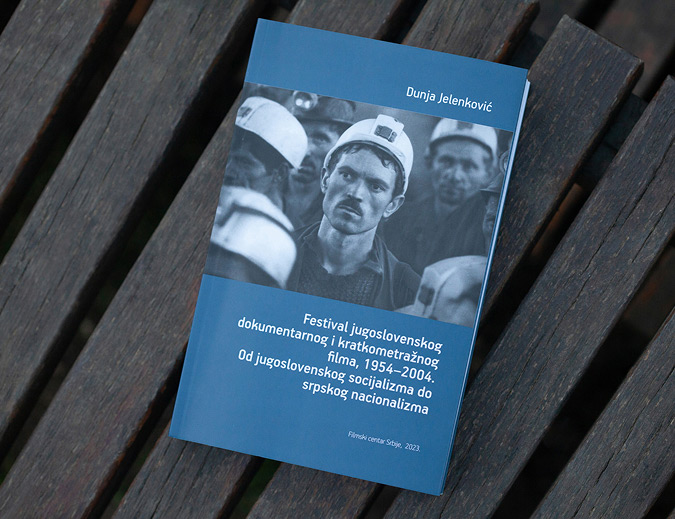
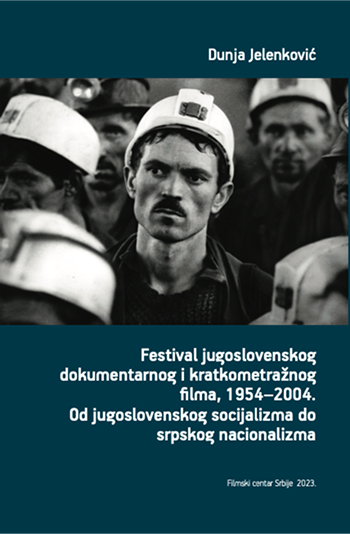
Beograd: Filmski centar Srbije, 2023 (Serbian, 558 pages, ISBN 978-86-7227-130-0)
Explore more
2013
[Monograph on the Belgrade Documentary and Short Film Festival], Beograd: FEST, 2013 (Serbian/English, 328 pages, ISBN 978-86-82975-32-8)
Academic Articles
Peer-reviewed research on film festivals, political history and cultural memory.
2026
NECSUS – European Journal of Media Studies, Spring Issue, 2026, ISSN: 2212-0217
This article takes 2025 as the point of departure to compare how the main European film festivals – Berlin, Cannes, and Venice – have responded to the invasions of Ukraine and Gaza. The analysis approaches film festivals as highly visible cultural events, which actively shape public opinion and cultural memory around major issues of the past and present, including war. Continuing their long history of political engagement in wartime contexts, the Cannes, Berlin, and Venice festivals responded to Russia’s 2022 full-scale invasion of Ukraine with immediate and unambiguous expressions of solidarity. In contrast, it was only in 2025, two years into Israel’s aggression on Gaza, that more substantial activities addressing the genocide appeared in these three festivals, including the Cannes tribute to Gazan photojournalist Fatima Hassouna (1999-2025). The year 2025 is pivotal for global war-related politics: from Trump’s return to office in January; to peaceful pro-Palestinian protesters being arrested globally; to the Trump administration’s peace plan and ceasefire in October, followed by repeated violations only days later. Against this backdrop, this article analyses the interplay between global politics and film festival responses to war. Its central question is why these institutions unanimously supported Ukraine, while largely asserting neutrality in the context of Gaza, and what makes such a stance problematic. By juxtaposing the cases of Ukraine and Palestine the article (developed within the MSCA project FESTWAR FM) offers contemporary insights into the role of film festivals in shaping cultural memory of war and adds to scholarly discussions on the silence around the Palestinian issue.
Keywords: film festivals, war and conflict, genocide, Gaza, Palestine, Ukraine, Berlin International Film Festival - Berlinale, Cannes Film Festival, Venice Film Festival
2026
Iluminace – The Journal of Film Theory, History and Aesthetics, Vol. 38, no. 1, Praha: Národní filmový archiv, pp. 81-102. ISSN: 250-9267
This article compares archival, programming and editorial practices of the Yugoslav/ Belgrade Documentary and Short Film Festival across three phases: its socialist Belgrade years when it endorsed the values of Yugoslav federalism (1960–1991), its post-socialist transformation when it retained its Yugoslav name but abandoned its Yugoslav profile (1991–2004), and its contemporary development as an international event in a neoliberal context (since 2004). It investigates how war influenced the choice of screened films, archived documents, and their representation in the catalogues, and how, in turn, these choices contributed to the construction of conflicting memories of war.
Keywords: Yugoslav documentary cinema, film festivals and wars, festival archives, cultural memory of war, socialism, post-socialism
2024
Alternator.Science, 3/2024
This article offers a short history of European film festivals' response to war and territorial conflicts throughout the 20th and 21st centuries. It highlights the strategic use of film festivals to shape ideological narratives and legitimise territorial claims, from the Trieste Crisis (1945-1954) to wars in Yugoslavia (1990s) to contemporary wars in Ukraine and Palestine. The article situates film festivals within broader frameworks of cultural diplomacy, soft power, and historical memory, contributing to scholarship on cinema, propaganda, conflict, and European cultural history.
Keywords: film festivals, war and conflict, Trieste Crisis, Ukraine, Palestine
2022
Cinergie – Il cinema e le altre arti, N.22 University of Bologna, 2022, pp. 55-68.
This article analyses film festival practices related to the Trieste Crisis, the diplomatic struggle over the Northern Adriatic borderlands between (capitalist) Italy and (socialist) Yugoslavia (1945-1954). It explores how different forms of festival activities, from film selecting to establishing of film festivals, have shaped conceptions of national identities in the region, by symbolically labelling disputed territories as “national”. Focusing on the way the local populations have been presented in films on this topic that circulated in major film festivals, it demonstrates the changing role of film festivals as playgrounds for political propaganda, from the early Cold War to contemporary post-socialist, nationalist and populist societies.
Keywords: Yugoslav cinema, Italian cinema, Trieste Crisis, Cold War, film festivals, film circulation
2021
Historical Journal of Film, Radio and Television, Volume 41, 2021, Issue 3: Dissent and Dissidents in Central and Eastern European Film, pp. 559-577, Routledge – Taylor & Francis Online
This article examines the position of critical cinema in socialist Yugoslavia by analysing the archives of the only documentary festival in the country, the Yugoslav Documentary and Short Film Festival in Belgrade (founded in 1954). It compares the festival’s most prosperous years, when a series of internationally acclaimed Black Wave films were screened (late 60 s/early 70 s), and its final socialist phase, when a series of ‘patriotic’ films, mostly seen as uninteresting by international programmers, were shown (late 80 s/early 90 s). Analysing the ideological change in the festival’s programming, the article shows how Yugoslav documentary moved from a critique within a socialist perspective in the 60s to the promotion of a predominantly anti-socialist and nationalist perspective in the 80s. In doing so, it demonstrates that although often regarded as ‘the’ dissident cinema of Yugoslavia, the Black Wave was in its essence in dialectical dialog with the socialist state, unlike the critical films of the late 80 s and early 90 s, which were arguing for regime change in favour of a nation-state. The article sheds light on the paradoxes of Yugoslav censorship and film exhibition opportunities, in the specific context of the only European country that was ruled by a communist government but that was outside of the Eastern Bloc.
Keywords: Yugoslav cinema, censorship, dissent, dissidents
2019
Zbornik radova Historijskog muzeja Bosne i Hercegovine “Fakti i artefakti”, 13/19, Sarajevo: Muzej BIH, 2019, pp. 135-189, ISSN 2566-3747 (cowritten with Xavier BOUGAREL)
This article analyses 14 documents from the archives of the Historical Museum of Bosnia and Herzegovina, relating to Muslim militias active in Northeastern Bosnia during the Second World War. These militias left few written documents on their own. However, their activities can be reconstructed through documents produced by other actors, including archival materials saved by the Yugoslav partisans, as well as the political and military figures of the Independent State of Croatia (NDH). The article discusses these documents and produces the originals in full.
Keywords: archives, Second World War, Independent State of Croatia, Bosnian Muslims in World War II
2018
Le Temps des Médias, No. 31, Fall 2018, pp. 257-258, Paris: Nouveau Monde éditions, ISBN 9782369427759
Short overview of my doctoral thesis.
2016
New Review of Film and Television Studies NRFTS, Special Issue: “Film Festival Origins and Trajectories”, Routledge – Taylor & Francis Online, 2016 vol. 14, No. 1, 76–92.
This article charts the history of the Yugoslav Documentary and Short Film Festival since its creation in 1954, comparing its development in two periods: firstly, the socialist Yugoslavia (1954–late 1980s/early 1990s), marked by the rule of Josip Broz Tito, and, secondly, the initial post-socialist period, marked by the nationalist politics of Slobodan Milosevic and the disintegration of the country and wars (the 1990s). The article shows the festival’s transition from one which screened films from six Yugoslav republics and championed the Yugoslav revolutionary heritage and the concepts of workers’ self-management and ‘brotherhood and unity’ into one which became a local Serbian–Montenegrin event, marked by Serbian nationalist discourse and a highly critical view of Yugoslavian socialism. Analyzing the changes in the festival’s programming policies at the times of the country’s political and ideological shifts, this article illustrates how political conditions influenced creative processes and exhibition patterns in the field of documentary film.
Edited Volume Chapters
Chapters in edited volumes exploring film festivals, cultural memory and political history.
2020
In Aida Vallejo, Ezra Winton (eds.), Documentary Film Festivals: Methods, History, Politics, Vol. I, Palgrave Macmillan, 2020, pp. 101-122, ISBN 978-3-030-17319-7
Read Article2017
In Andreas Kötzing, Caroline Moine (eds.), Cultural Transfer and Political Conflicts. Film Festivals in the Cold War, Göttingen: V&R unipress, 2017, pp. 47-62, ISBN 9783847105886
Read Article2013
In Dunja Jelenkovic (ed.), The Short Film Fest – 60 Years. Monograph on the Belgrade Documentary and Short Film Festival, Belgrade, Belgrade: FEST, 2013, pp. 14-203, ISBN 978-86-82975-32-8
Request accessAdditional Writing
Selected writings beyond peer-reviewed formats, engaging with contemporary academic and cultural debates.
2024
Alternator.Science, 20/2024
Read ArticleProfiles & Platforms
Access my publications and research activity in academic platforms.


